Enterprise Resource Planning (ERP) systems are transformative tools that unify finance, human resources, procurement, operations, and customer data into a single digital backbone. However, despite their potential, ERP projects often struggle—not because of technology limitations, but because the organization itself isn’t ready for change.
Organizational readiness is the foundation that determines whether an ERP system delivers real value or becomes an expensive, underused platform. It ensures that the organization, its people, and its processes are prepared to absorb, adapt to, and sustain the transformation that ERP brings.
Understanding the Link Between Readiness and ERP Success
ERP implementation is more than a technical exercise—it’s a large-scale business transformation. It changes how data is managed, how decisions are made, and how people perform their daily work. Organizational readiness bridges the gap between technology and people, ensuring that change is accepted rather than resisted.
When an organization is ready for ERP, it can:
- Align business processes with system design instead of forcing the system to fit old workflows.
- Enable faster adoption and reduce employee resistance.
- Minimize disruption during transition and go-live phases.
- Achieve more accurate, real-time data for decision-making.
- Deliver return on investment faster through improved efficiency and performance.
In short, readiness determines not just whether ERP goes live—but whether it thrives.
Key Components of Organizational Readiness
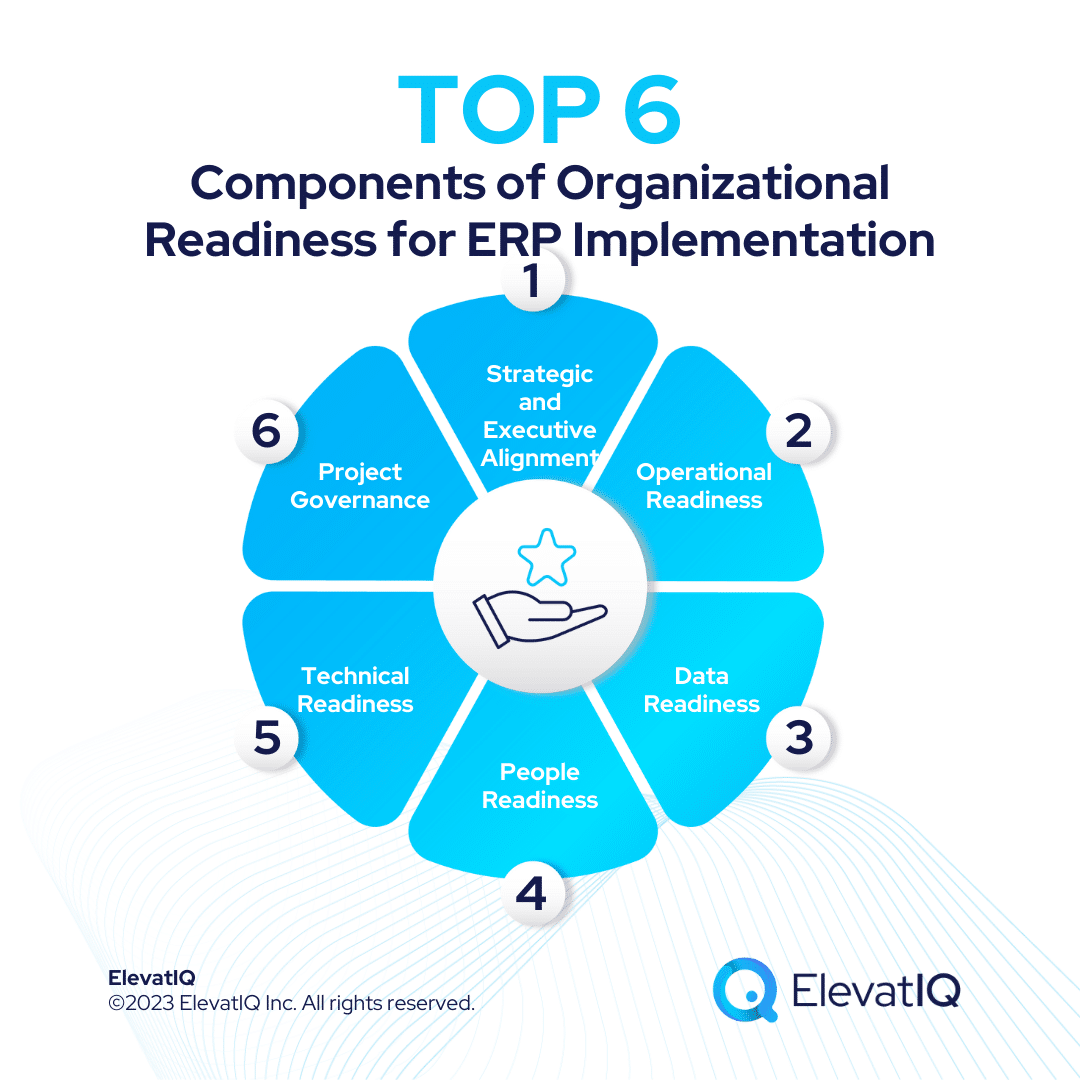
Building readiness requires focus across several interdependent areas:
- Leadership Commitment and Vision
Strong leadership is essential for driving the ERP journey. Executives must articulate a clear vision that connects ERP goals to the organization’s mission, ensuring alignment across departments and sustained sponsorship throughout the project lifecycle. - Change Management and Communication
ERP disrupts familiar processes. A robust change management plan—anchored in transparency, two-way communication, and stakeholder engagement—helps mitigate anxiety and fosters trust. Employees who understand why the change is happening are more likely to support it. - Process Standardization and Optimization
ERP thrives on consistency. Before implementation, organizations should document, streamline, and standardize business processes. Clean, efficient workflows reduce customization needs and enable the ERP to function as designed. - Data Readiness and Governance
Poor data quality can undermine even the most sophisticated ERP system. Ensuring data accuracy, consistency, and governance practices before migration prevents costly rework and ensures reliable analytics post-implementation. - Workforce Readiness and Capability Building
Employees must feel confident using the new system. Investing in targeted training, role-based simulations, and early involvement helps build ownership and reduces resistance. - Technical and Infrastructure Preparedness
Assessing legacy systems, integration points, and network capacity ensures the technology foundation can support ERP performance and scalability.
How Readiness Accelerates ERP Success
Organizational readiness provides tangible benefits across all phases of ERP implementation:
- During Planning: It clarifies scope, aligns stakeholders, and defines realistic timelines and budgets.
- During Implementation: It minimizes resistance, promotes collaboration, and ensures project momentum even amid setbacks.
- During Adoption: It accelerates user onboarding and data utilization, enabling faster realization of benefits.
- Post-Go-Live: It sustains continuous improvement through feedback loops, governance structures, and performance monitoring.
Organizations that invest in readiness enter ERP implementation with clarity, confidence, and a higher chance of long-term success.
The Risks of Skipping Readiness
When readiness is overlooked, ERP projects often face predictable issues:
- Misalignment between business processes and system design
- Low employee adoption and system underuse
- Inaccurate data and reporting failures
- Implementation delays and budget overruns
- Loss of organizational trust in the new system
In essence, neglecting readiness turns technology into a liability rather than a strategic enabler.
Building a Culture of Readiness
Organizational readiness is not a one-time milestone; it’s a mindset. Leaders must cultivate a culture of adaptability, continuous learning, and cross-functional collaboration. By doing so, the organization becomes capable not only of implementing ERP but also of evolving with future technological and process innovations.
Conclusion
ERP implementation success is not determined by software capability—it’s determined by organizational readiness. A prepared organization understands its goals, empowers its people, and aligns its processes with technology. When readiness is prioritized, ERP becomes more than a system—it becomes a catalyst for operational excellence, data-driven decision-making, and sustainable growth.
 Solution Minded GovTech Project Manager